
1. Project Area
Name
Lameiros Valongo do Vouga
Abstract
Luís Lemos and Pedro Lemos, brothers, born in 1940, still remember the day they visited the property they would later inherit from their father: a plot of land which at the time was just wild scrub with a lot of gorse, maritime pines, vipers, and some water, which probably gave rise to its name – Lameiros, Valongo do Vouga. It was 1952.
While they were abroad, in 1972, a large fire started by the Vouga steam train burned the entire property.
In the 80s, Luís and Linda began to transform that piece of wild hillside into a small forest where it would be pleasant to spend weekends with their three children and anyone else who came in goodwill! Both of them working full-time, they could only be there on weekends and during holidays, but all those days put together were enough for them to gradually build that little oasis.
In 1985, another major fire. The decision was made to reforest with broadleaf trees: chestnut, oak, and cork oak, although it was still a mixed area, with the presence of eucalyptus. In 1995 they signed a 25?year contract with one of the paper companies, in order to get help keeping the land cleared and at the same time some income to support investments in new forest. In 2011 the nematode appeared and the maritime pines began to disappear. In 2013 there was another fire, this time with a surprise: the fire did not cross the water line with more broadleaf trees, the heart of the property was protected; we believe it will always be so. This realization, and the possibility of making decisions regarding the contract with the pulp company, led to the following decision: eucalyptus out.
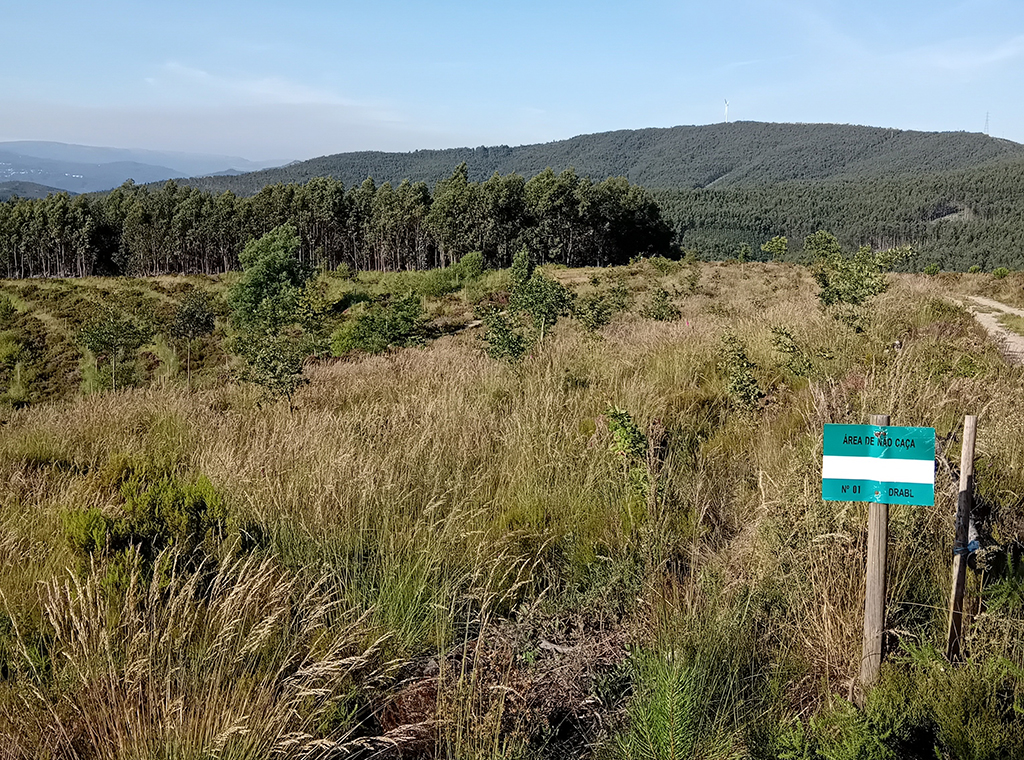
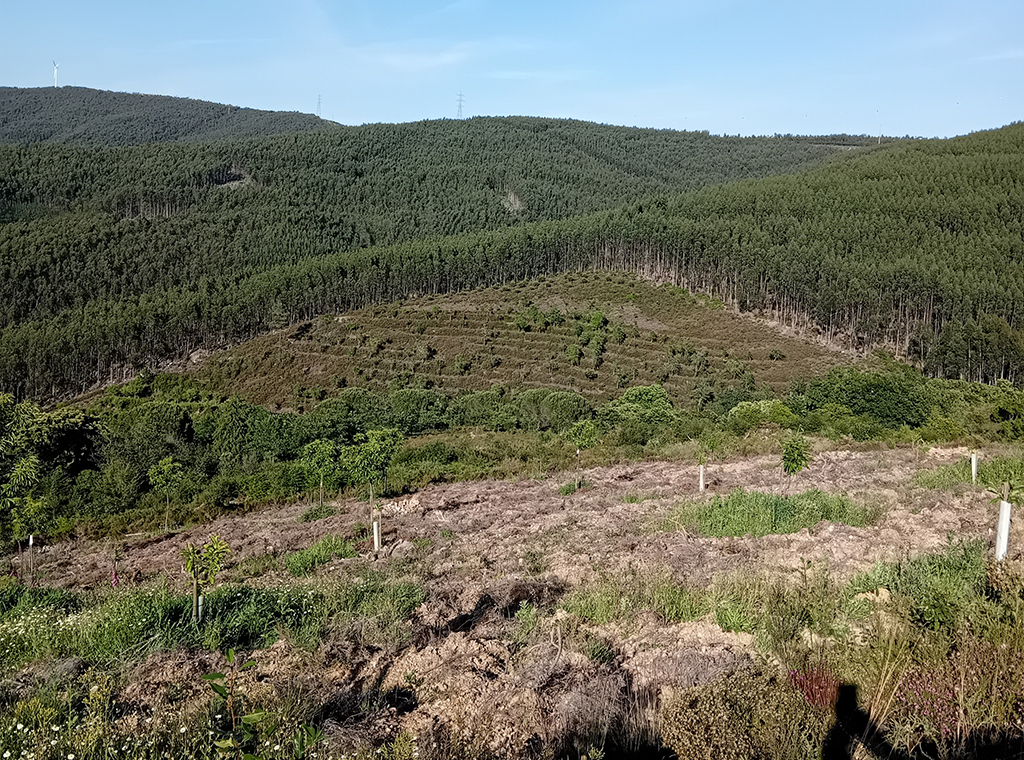
In 2020, year zero arrived: the property was free of eucalyptus, small trees were planted, and the future became something to dream about.
In 2021, with new legislation freshly in place, it was decided to define the area as “No Hunting” and to apply for the corresponding license (curiously the first at national level), proudly displayed at strategic points on the property: – Here everyone has the right to live (everyone except the eucalyptus).
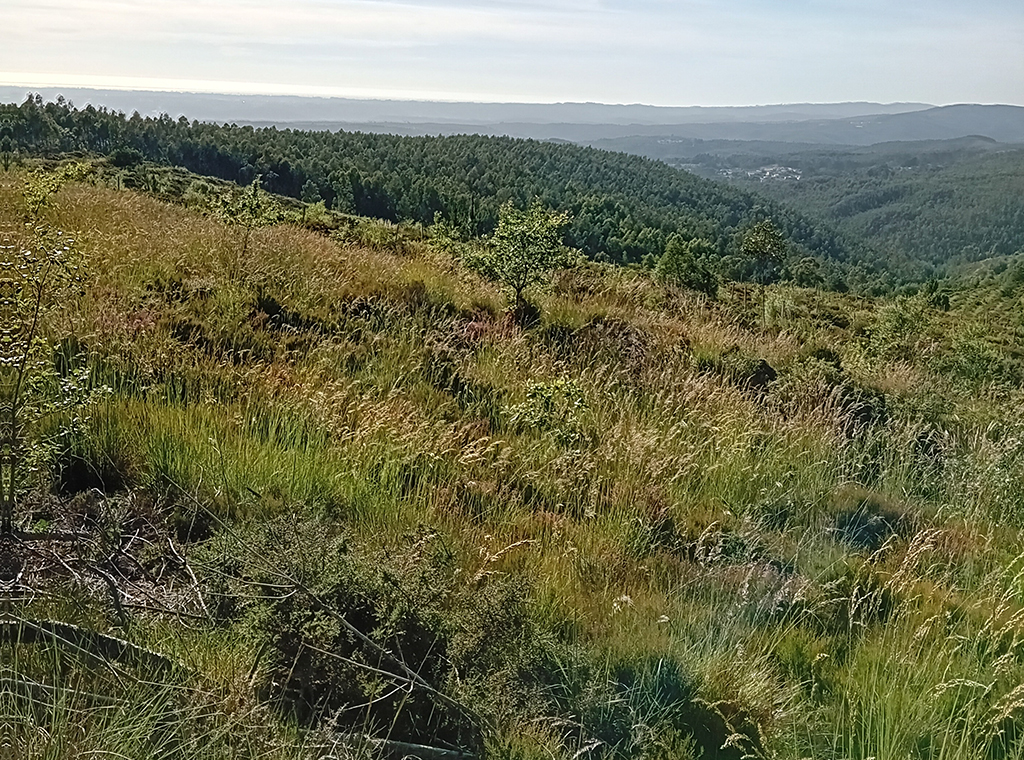
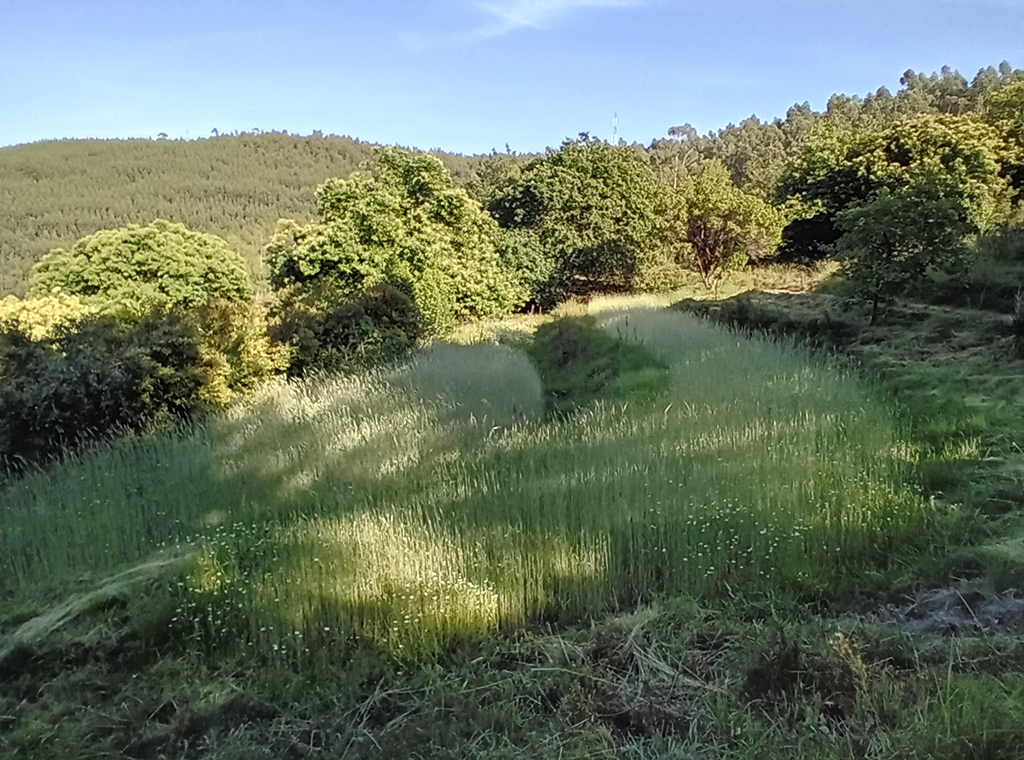
Our “Serra”, as we call it, grew, becoming a small forest of chestnut, oak, holm oak, cork oak, strawberry tree, birch, holly, stone pine, a few survivor maritime pines, laurel, ash, hackberry, beech, hazel, service tree... with several fruit trees, especially juicy citrus, and a tiny vegetable garden. Always with the future in mind: biodiversity, the environment, the habitat that was developing there little by little.
In that small world there was abundant animal life; much of it was discovered with special cameras, other creatures simply through careful listening, attentive eyes, and a bit of silence, and always the same joy.
For us, realizing that despite the dangerous neighboring eucalyptus stands and the desert of life into which their territories are transformed, our well?cared?for 17 hectares were enough to allow so much life, was always an added motivation. The animal kingdom was grateful and rewarded us with small surprises.
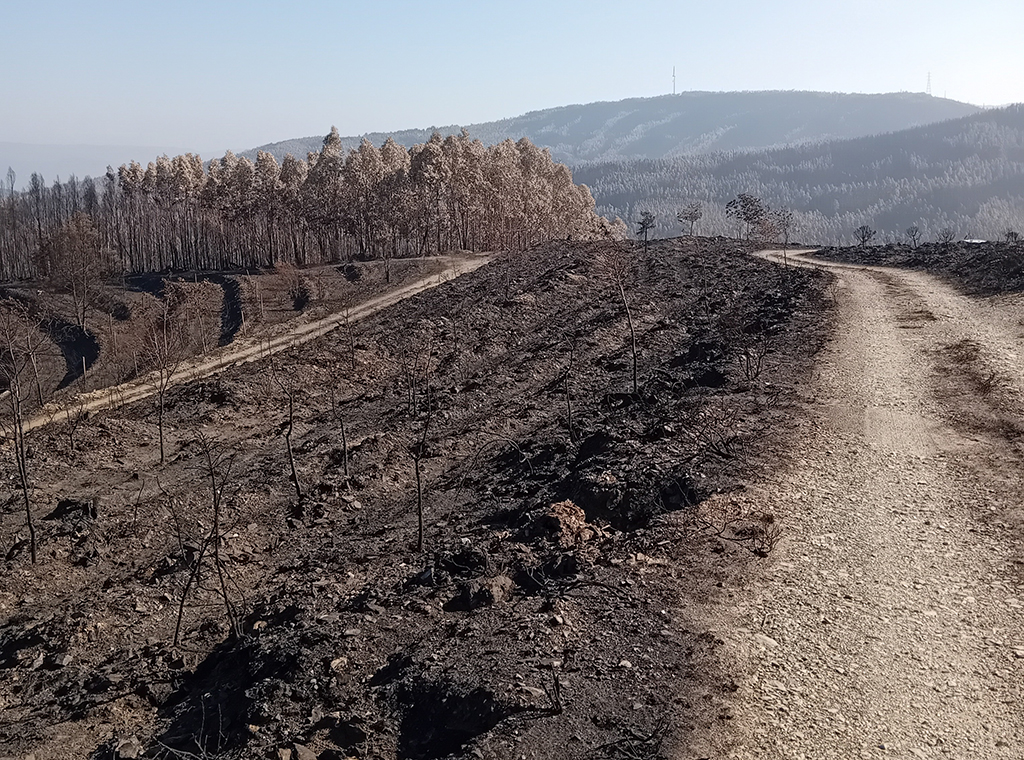
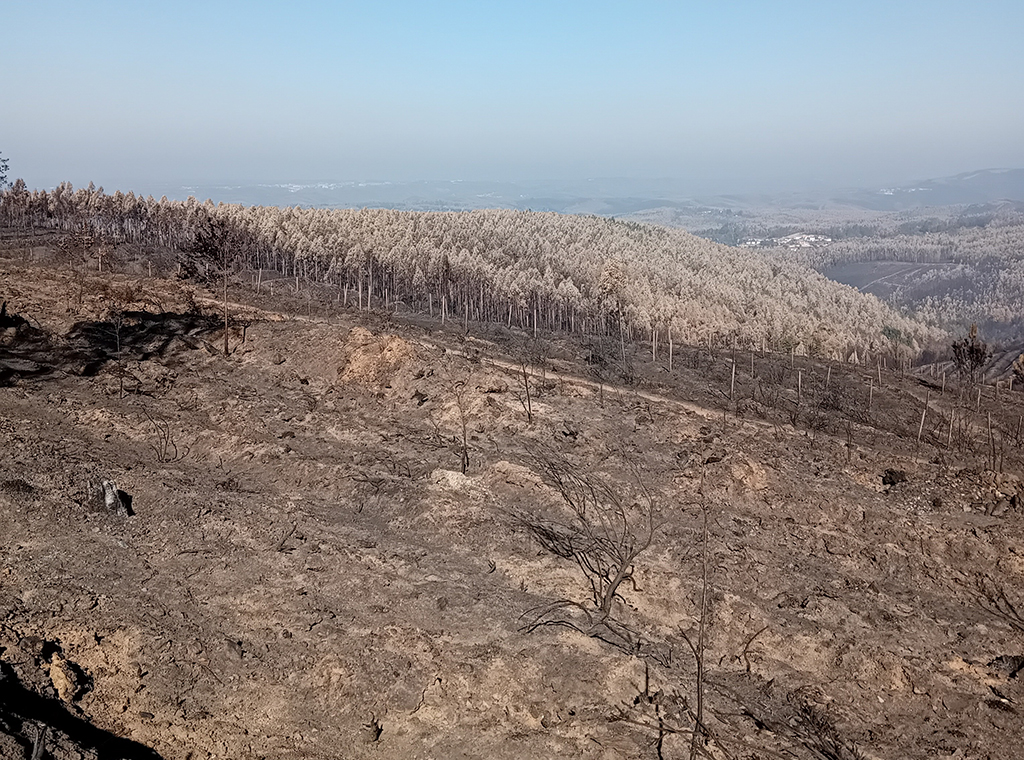
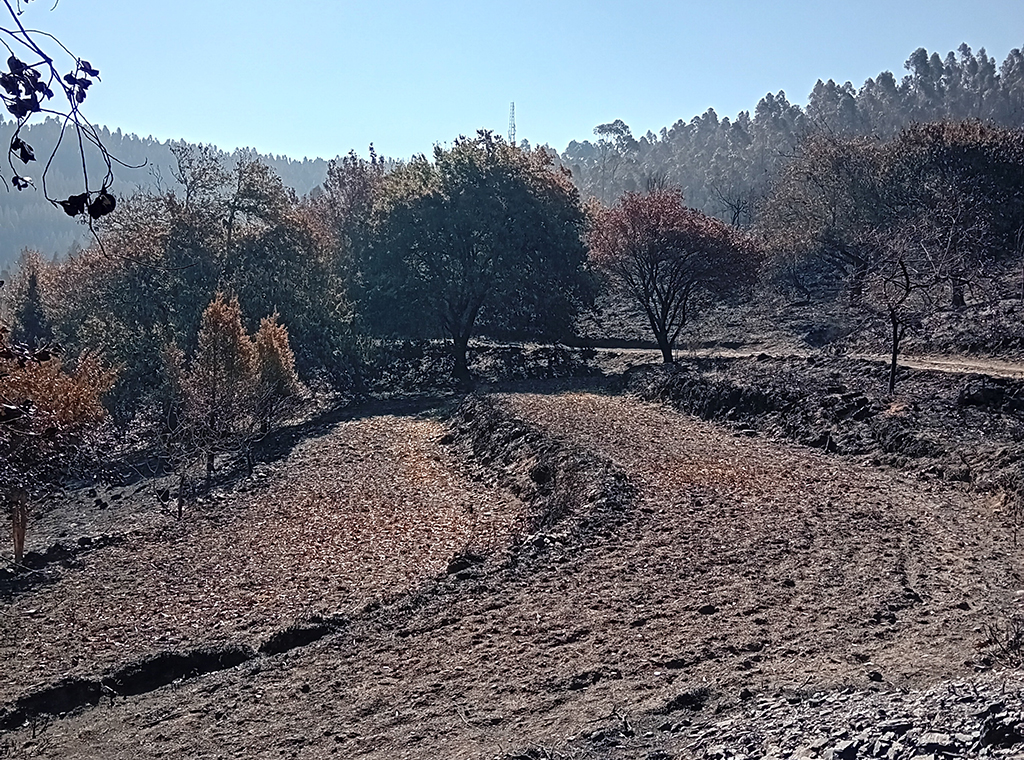
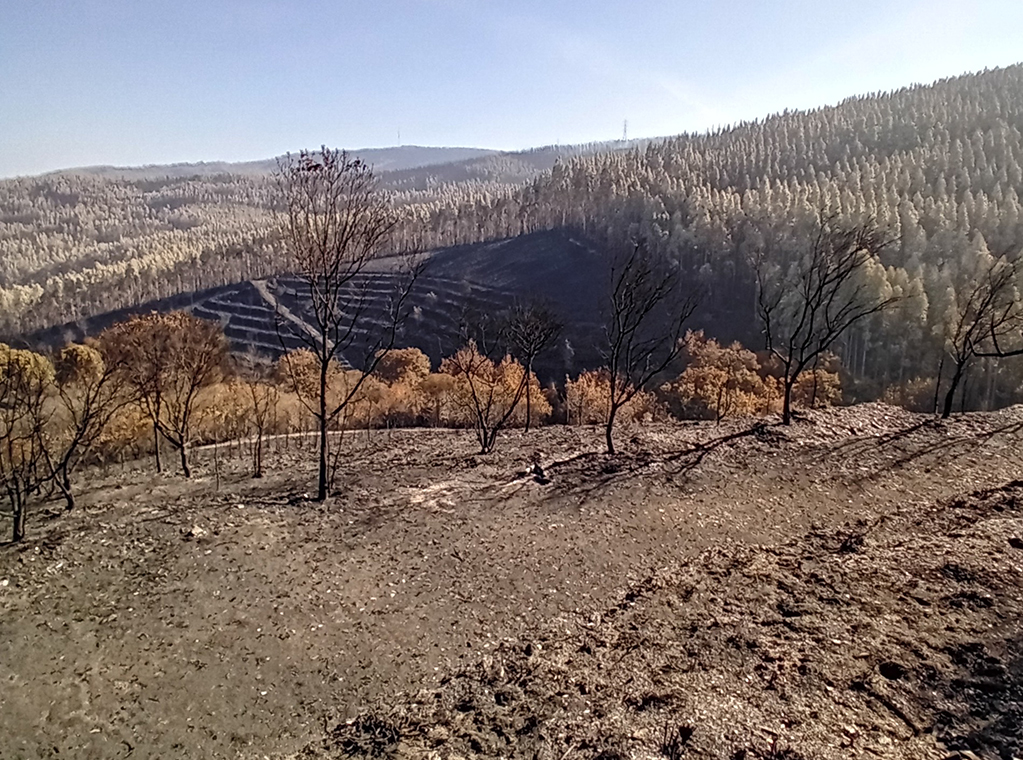
This is what our Serra was like at the end of the summer of 2024, when a brutal fire devoured all the eucalyptus plantations around us and, with them, practically all of our small forest.
The devastation this time was total, almost total... Together with our tears, trees over 40 years old burned, stone pines that we will never see green again, hollies more than 3 meters tall, our leafy chestnut trees, enormous oaks that lined the largest watercourse on the land, trees that cast deep shade, that created a small microclimate around them, that provided shelter for dozens of birds that always flew freely around there, trees that were life companions, and an entire recent plantation that had promised a future.
After the 2024 fire, still with anger in our chests (an arson fire, set around 2 a.m. on a hot, windy night) and sadness in our hearts (just like that, from one dawn to the next, all the green and color is transformed into death, into deep black), there was no alternative. Hands to work, with everyone’s help, time to rebuild. Luís and Linda, now retired, spend many of their days there. Pedro, the brother, is a regular presence, two arms and company that help a great deal. The children and grandchildren come whenever life allows.
We are rebuilding with the same hope as always: that fire will never enter there again, that every spring there will be more green leaves sprouting, that summers will be cooler, that the song of birds will always be heard.
Changing the type of trees with the necessary resilience in mind, in the face of climate change and the surrounding environment, we chose to reforest with a strong emphasis on cork oak, while maintaining variety with other native species and also helping those trees that, resilient, decided to sprout again a few months after the terror.
So here we are now, replanting the hundreds of trees purchased after the fire, protecting the small trees from the animals that wander there hungry, nibbling at everything that promises some green freshness.
This entire process of transforming the 17 hectares was carried out without recourse to public aid. All the money invested is private. No environmental program fit, since there was always something missing in order to be eligible: either the property was too large, or too small, or it had to belong to a company, or to an entrepreneur, or it had to be in another region... Fortunately, this family’s decisions were made on nature’s side and so we invested in what we consider non?negotiable: the forest, the real, living forest.
We are open to receiving support from those who, like us, put nature first, and only from those who genuinely aim to support and share the same objectives, in a relationship of transparency and mutual trust, and which is different from mere corporate responsibility or policy.
We are now focused on keeping the areas clear of undergrowth, on managing to enlarge the area of forest intervention by acquiring more neighboring plots in order to remove eucalyptus completely and replant with native species, on protecting the small trees and shrubs from animals that, hungry, draw near, on helping the small trees to put down roots with watering during the hottest months in the first years, and on replacing trees that, for one reason or another, die. Here we stand.
Images
Land Ownership
Owned by Organization/Individual
2. Project Aims
Environment
Air
Soil
Chemicals
Circular Economy & Waste
Water & Wastewater
Noise
New European Bauhaus
Climate & Energy
Climate Mitigation
Land Use, Agriculture and ForestryEnergy
No information availableNature & Biodiversity
Ecosystem Conservation/Restoration
Forests - Mixed, Freshwater - Running Waters, Natural & Seminatural Grasslands, Bogs, Marshes, Water fringed vegetation, FensThreatened Species Conservation
Amphibians: Chioglossa Lusitanica
Arthropods: Euplagia Quadripunctaria
Management of Invasive Alien Species
Vascular Plants: Acacia Spp, Cortaderia Selloana, Hakea Sericea, Oxalis Pes-caprae
Other Project Aims
No information available
3. PROJECT LINKS
Networks
iNaturalist (URL: https://www.inaturalist.org/projects/serra-da-samouca)
Membership
No information available
4. PRODUCTS & SERVICES
Ecosystem Services
Terrestrial plants and animals for food: Provided, Used
Water for human consumption: Provided, Used
Biomass based energy: Provided, Used
Water flow regulation: Provided, Used
Water quality regulation: Provided, Used
Pedogenesis and soil quality regulation: Provided, Used
Lifecycle maintenance, habitat and gene pool protection: Provided, Used
Pest and disease control (incl. invasive alien species): Provided, Used
Aesthetic, Heritage: Provided, Used
Spiritual: Provided, Used
Recreation and community activities: Provided, Used
Information & knowledge: Provided, Used
Productive Activities
Agriculture: Annual Crops, Permanent Crops
Forestry: wood-fuel, non-timber
Livestock: poultry
5. DETAILS
Impact Plan
No
6. Funding
Looking for Funding
Own Funding